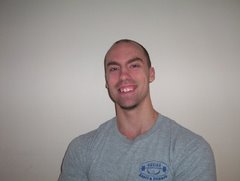
For those that don't know, I was asked to start a fitness blog for The Boston Herald a few months ago. I have also been trying to keep up with this blog as well, and I have obviously failed miserably.
That being said, I have decided that it would be best to focus my attention on ONE blog only. I have been updating my blog on The Boston Herald much more often and feel that it would be in my best interest to not be the guy who has 15 blogs at the same time. Chicks just don't dig that.
Nonetheless, for the time being I will only be updating my blog there. Check it out here:
Step Up
Enjoy!
Tuesday, October 2, 2007

Thursday, September 20, 2007
Your Body Hates You
The above statement is one that I like to use often, and is one that I "stole" from Lyle McDonald.
I like to use it whenever someone asks me why it's a bad idea to not eat when trying to lose weight (more specifically fat). I can understand the rationale of some people who feel that the best way to lose weight is to just flat out not eat. It makes complete sense, really. I mean if someone has around 40 lbs of fat to lose, surely the body will just use the excess fat as fuel and burn it off faster than Britney Spears can totally bomb her big "comeback."
Thing is your body hates you and is waaaaaay smarter than you. When you reduce calories too low, the body doesn't realize that you're doing so in order to look good in a bathing suit. It views this drastic drop in caloric intake as you going into starvation mode, and it will do everything in its power to keep that from happening. How?
One word: Leptin
Leptin is a protein based hormone that is made in your fat cells (of all places) and one of its main jobs is to communicate information to your brain (via leptin receptors located on fat cells), such as how much body fat you have and how many calories you're currently taking in per day. The more body fat one has or the more calories he or she is taking in per day, the more leptin that is floating around in the body; and vice versa. It should be noted that caloric intake controls leptin levels a bit more than overall body fat levels.
To make a long (and very complicated) story short, when someone drastically reduces their caloric intake in an attempt to shed body fat, leptin levels can drop as much as 50% within 1-2 days. As a result, the body goes into "panic" mode and sends a signal to your brain that you're starving and will basically go into preservation mode telling your body to starting storing fat (rather than burning it off). Side note: your body will also start burning off muscle, which is the last thing you want it to do. This is why diets that call for a drastic reduction in calories or when someone basically doesn't eat in the hopes of shedding body fat doesn't work in the long run.
Obviously there are many other variables that I could (and should) elaborate on, but the resounding conclusion to take home is that you can not go against millions of years of human evolution and expect to come out the winner when following less than optimal protocols.
So what is one to do?
Well for starters, don't listen to anyone who wears sunglasses indoors. It's dumb and they should not be trusted. Secondly, take dieting breaks every few weeks and bring caloric levels back up to maintenance levels. Doing so will not only keep you sane, but will provide many physiological advantages as well (bringing leptin levels back up to normal). Thirdly, lift weights. What makes muscle, keeps muscle. Don't be lame and lift pink dumbbells for 20 reps or go out and run a marathon everyday (ever notice how those people still kind of look "skinny fat?"). Go to the gym, lift some heavy weights, scare people, and go home.
I like to use it whenever someone asks me why it's a bad idea to not eat when trying to lose weight (more specifically fat). I can understand the rationale of some people who feel that the best way to lose weight is to just flat out not eat. It makes complete sense, really. I mean if someone has around 40 lbs of fat to lose, surely the body will just use the excess fat as fuel and burn it off faster than Britney Spears can totally bomb her big "comeback."
Thing is your body hates you and is waaaaaay smarter than you. When you reduce calories too low, the body doesn't realize that you're doing so in order to look good in a bathing suit. It views this drastic drop in caloric intake as you going into starvation mode, and it will do everything in its power to keep that from happening. How?
One word: Leptin
Leptin is a protein based hormone that is made in your fat cells (of all places) and one of its main jobs is to communicate information to your brain (via leptin receptors located on fat cells), such as how much body fat you have and how many calories you're currently taking in per day. The more body fat one has or the more calories he or she is taking in per day, the more leptin that is floating around in the body; and vice versa. It should be noted that caloric intake controls leptin levels a bit more than overall body fat levels.
To make a long (and very complicated) story short, when someone drastically reduces their caloric intake in an attempt to shed body fat, leptin levels can drop as much as 50% within 1-2 days. As a result, the body goes into "panic" mode and sends a signal to your brain that you're starving and will basically go into preservation mode telling your body to starting storing fat (rather than burning it off). Side note: your body will also start burning off muscle, which is the last thing you want it to do. This is why diets that call for a drastic reduction in calories or when someone basically doesn't eat in the hopes of shedding body fat doesn't work in the long run.
Obviously there are many other variables that I could (and should) elaborate on, but the resounding conclusion to take home is that you can not go against millions of years of human evolution and expect to come out the winner when following less than optimal protocols.
So what is one to do?
Well for starters, don't listen to anyone who wears sunglasses indoors. It's dumb and they should not be trusted. Secondly, take dieting breaks every few weeks and bring caloric levels back up to maintenance levels. Doing so will not only keep you sane, but will provide many physiological advantages as well (bringing leptin levels back up to normal). Thirdly, lift weights. What makes muscle, keeps muscle. Don't be lame and lift pink dumbbells for 20 reps or go out and run a marathon everyday (ever notice how those people still kind of look "skinny fat?"). Go to the gym, lift some heavy weights, scare people, and go home.
Tuesday, September 18, 2007
Q: Hey Tony, I've read your "The Rule of 90%" article and have started incorporating more lifts above 90% into my programming, however I am little perplexed as to when (or if) I should include any cardio during the week (ie: John Berardi's "G-Flux" approach). Do you have any thoughts?
A: First off, I'm glad you liked the article. I've said it before, and I will say it again: if one of your goals is to get strong, you NEED to include more lifts above 90% into your programming. Performing 5x5 will only take you so far. Many intermediate and advanced trainees miss the boat in this regard. For those not familiar with what I am talking about, read the article for crying out loud (wink).
As far as your question pertaining to cardio (I'm just going to assume you're referring to high intensity intervals); absolutely you can include it in your weekly schedule. The key is to just know how to control your CNS (Central Nervous System) intensive training. Training over 90% is pretty taxing on the CNS, as is going out and running sprints on a football field. The objective here is to try to "condense" your CNS intensive training so that you're not running yourself into the ground every week (pun intended).
I'm a firm advocate that most trainees should give themselves at least 1-2 days of complete rest per week. The problem is, most people will train everyday to some degree not realizing that they're stunting their progress from training too much (fatigue will always masks one's true fitness level). I'll give you an example from my own weekly breakdown.
Monday: Lower Body (DE Squat)
Tuesday: OFF
Wednesday: AM: Sprints, PM: Upper Body (ME Bench)
Thursday: Lower Body (ME Squat/Deadlift)
Friday: OFF
Saturday: Upper Body (DE Bench)
Sunday: AM: Sprints
Rather than sprint on Tuesday, I just take that day off and perform a quick AM session on Wednesday because I know the sprints won't necessarily affect my upper body workout later that night. Ideally I should perform my other day of sprints on Friday, but I like to train with my girlfriend on Sundays and we go to the track together and run our sprints (awwwww).
On my OFF days, I still may do some light walking or extra mobility work in the gym, but I do NO CNS intensive training on those days.
If you're just looking to include a few easy sessions of steady state cardio in per week, I see no reason why you couldn't include a brief 15-20 minute "cardio session" after your upper body days.
A: First off, I'm glad you liked the article. I've said it before, and I will say it again: if one of your goals is to get strong, you NEED to include more lifts above 90% into your programming. Performing 5x5 will only take you so far. Many intermediate and advanced trainees miss the boat in this regard. For those not familiar with what I am talking about, read the article for crying out loud (wink).
As far as your question pertaining to cardio (I'm just going to assume you're referring to high intensity intervals); absolutely you can include it in your weekly schedule. The key is to just know how to control your CNS (Central Nervous System) intensive training. Training over 90% is pretty taxing on the CNS, as is going out and running sprints on a football field. The objective here is to try to "condense" your CNS intensive training so that you're not running yourself into the ground every week (pun intended).
I'm a firm advocate that most trainees should give themselves at least 1-2 days of complete rest per week. The problem is, most people will train everyday to some degree not realizing that they're stunting their progress from training too much (fatigue will always masks one's true fitness level). I'll give you an example from my own weekly breakdown.
Monday: Lower Body (DE Squat)
Tuesday: OFF
Wednesday: AM: Sprints, PM: Upper Body (ME Bench)
Thursday: Lower Body (ME Squat/Deadlift)
Friday: OFF
Saturday: Upper Body (DE Bench)
Sunday: AM: Sprints
Rather than sprint on Tuesday, I just take that day off and perform a quick AM session on Wednesday because I know the sprints won't necessarily affect my upper body workout later that night. Ideally I should perform my other day of sprints on Friday, but I like to train with my girlfriend on Sundays and we go to the track together and run our sprints (awwwww).
On my OFF days, I still may do some light walking or extra mobility work in the gym, but I do NO CNS intensive training on those days.
If you're just looking to include a few easy sessions of steady state cardio in per week, I see no reason why you couldn't include a brief 15-20 minute "cardio session" after your upper body days.
Thursday, September 13, 2007
They?
“They” say that performing fasted state cardio is the best way to shed fat. “They” also say that diets high(er) in protein are going to make your kidneys explode and that squats are bad for your knees . Who are they? I have no idea. Can you please point me in the direction of where “they” are so that I can have a little word with them (ie: drop kick them across the face).
Wednesday, September 5, 2007
Been Awhile
A lot has happened since I last blogged.
1. Went to Vegas (yes, I survived my first plane ride) and dropped $80 gambling. The girlfriend, however, won $800. Needless to say dinner was on her the last few nights we were there.
2. Lost 7 lbs in a week due to moving and getting into an accident while moving. Read: moving sucks donkey balls.
3. Been training a lot of athletes in the new facility, which has been a blast and has taken up the majority of my time obviously.
One of the cool things about the new facility is that we have been having a few people here and there stop by to observe and see how we operate. Last week I was discussing program design with one such person and he asked, "what are some of the main variables you take into consideration when designing a program for an athlete?"
Simple answer: decide what they should NOT be doing, and go from there. A great example would be baseball players. The vast majority do not need to be performing overhead movements, and we tend to exclude any overhead pressing (more specifically any BARBELL pressing) into their programming. We do allow pressing movements, but most entail the use of dumbbells, and with a neutral grip. Barbells lock "us" into a pronated grip, which promotes a bit more internal rotation of the glenohumeral joint. By having our baseball players stick to dumbbells or any bar which allows for a NEUTRAL grip, they're able to get a bit more external rotation, and thus "save" their shoulder.
Certainly there are a plethora of other variables that go into program design, but trying to figure out which movements a certain athlete or client shouldn't be doing will make the job much easier in the long run.
1. Went to Vegas (yes, I survived my first plane ride) and dropped $80 gambling. The girlfriend, however, won $800. Needless to say dinner was on her the last few nights we were there.
2. Lost 7 lbs in a week due to moving and getting into an accident while moving. Read: moving sucks donkey balls.
3. Been training a lot of athletes in the new facility, which has been a blast and has taken up the majority of my time obviously.
One of the cool things about the new facility is that we have been having a few people here and there stop by to observe and see how we operate. Last week I was discussing program design with one such person and he asked, "what are some of the main variables you take into consideration when designing a program for an athlete?"
Simple answer: decide what they should NOT be doing, and go from there. A great example would be baseball players. The vast majority do not need to be performing overhead movements, and we tend to exclude any overhead pressing (more specifically any BARBELL pressing) into their programming. We do allow pressing movements, but most entail the use of dumbbells, and with a neutral grip. Barbells lock "us" into a pronated grip, which promotes a bit more internal rotation of the glenohumeral joint. By having our baseball players stick to dumbbells or any bar which allows for a NEUTRAL grip, they're able to get a bit more external rotation, and thus "save" their shoulder.
Certainly there are a plethora of other variables that go into program design, but trying to figure out which movements a certain athlete or client shouldn't be doing will make the job much easier in the long run.
Friday, August 17, 2007
Vegas Baby
Off to Las Vegas this weekend. Word has it that they're taking bets on whether or not I shit myself during take-off.
Side Note: for those that don't know, this will be my very first time on a plane.
Needless to say a good time will be had. And by "good time" what I really mean is..........we'll be doing everything but going to see Celine Dion.
I'm out!
Side Note: for those that don't know, this will be my very first time on a plane.
Needless to say a good time will be had. And by "good time" what I really mean is..........we'll be doing everything but going to see Celine Dion.
I'm out!
Wednesday, August 15, 2007
5 Quick Tips to Increase Strength
1. Warning: Captain Obvious suggestion of the day.
Creatine. It still dumbfounds me to think that there are people out there who train on a consistent basis, yet are STILL not taking creatine everyday (and yes, this includes you as well ladies). It's the most researched supplement in human history and it's efficacy has been proven time and time again.
It's safe
It works
It's NOT steroids
You do not need to do a loading phase.
Just take 5 grams of creatine monohydrate (no need to buy the expensive brands) per day in your pre/post training shake or with a high(er) carb meal and that's that. Here's a great article written by Cassandra Forsythe and Jen Heath titled "Creatine for Women."
2. Take your shoes off when you deadlift. I usually see an instant increase in the amount of weight someone can pull when they take their shoes off. Why? Well for starters, by taking your shoes off you're now .5-1.0 inches closer to the ground, which is .5-1.0 LESS distance the bar has to travel. Secondly, by taking your shoes off you're now able to pull through your heels, and as a result recruit more of your glutes and hamstrings to help out. Thirdly, people will automatically think you're badass cause you're training with no shoes on. Unless of course your feet smell like you've been walking through a sewer all day, then that's definitely not cool.
3. Glute Activation. If your glutes don't fire, the hamstrings and lower back have to do more work when you squat or deadlift. Performing some simple glute activation techniques beforehand will undoubtedly enable you to handle more weight because you will now have more muscle fibers "turned on" to help with the movement. The more muscle fibers and motor units that are turned on, the more weight you will be able to lift.
4. Cut your volume. If you haven't been making any progress in the gym for an extended period of time, it may be time to deload or cutback on your training volume. I've said this on numerous occasions, but FATIGUE WILL ALWAYS MASK ONE's FITNESS. A great analogy I like to use is one that I got from my good friend Eric Cressey. Assume we find your one rep max on the bench press. Now I have you go out and run 10 miles. Do you think after running 10 miles, that you will be able to even come close to your one rep max again? More is NOT better.
5. Rotate Movements. For intermediate and advanced trainees, most would bode will by rotating their main movements more. Try to alternate your squat, deadlift, and bench movements every 1-2 weeks. In doing so, you will keep the body guessing and maybe more importantly, keep your body fresh.
Creatine. It still dumbfounds me to think that there are people out there who train on a consistent basis, yet are STILL not taking creatine everyday (and yes, this includes you as well ladies). It's the most researched supplement in human history and it's efficacy has been proven time and time again.
It's safe
It works
It's NOT steroids
You do not need to do a loading phase.
Just take 5 grams of creatine monohydrate (no need to buy the expensive brands) per day in your pre/post training shake or with a high(er) carb meal and that's that. Here's a great article written by Cassandra Forsythe and Jen Heath titled "Creatine for Women."
2. Take your shoes off when you deadlift. I usually see an instant increase in the amount of weight someone can pull when they take their shoes off. Why? Well for starters, by taking your shoes off you're now .5-1.0 inches closer to the ground, which is .5-1.0 LESS distance the bar has to travel. Secondly, by taking your shoes off you're now able to pull through your heels, and as a result recruit more of your glutes and hamstrings to help out. Thirdly, people will automatically think you're badass cause you're training with no shoes on. Unless of course your feet smell like you've been walking through a sewer all day, then that's definitely not cool.
3. Glute Activation. If your glutes don't fire, the hamstrings and lower back have to do more work when you squat or deadlift. Performing some simple glute activation techniques beforehand will undoubtedly enable you to handle more weight because you will now have more muscle fibers "turned on" to help with the movement. The more muscle fibers and motor units that are turned on, the more weight you will be able to lift.
4. Cut your volume. If you haven't been making any progress in the gym for an extended period of time, it may be time to deload or cutback on your training volume. I've said this on numerous occasions, but FATIGUE WILL ALWAYS MASK ONE's FITNESS. A great analogy I like to use is one that I got from my good friend Eric Cressey. Assume we find your one rep max on the bench press. Now I have you go out and run 10 miles. Do you think after running 10 miles, that you will be able to even come close to your one rep max again? More is NOT better.
5. Rotate Movements. For intermediate and advanced trainees, most would bode will by rotating their main movements more. Try to alternate your squat, deadlift, and bench movements every 1-2 weeks. In doing so, you will keep the body guessing and maybe more importantly, keep your body fresh.
Tuesday, August 7, 2007
"I don't like cottage cheese."

I hear the above quote a lot.
Young athletes always ask me what they should be eating on a daily basis, and inevitably I will mutter cottage cheese. You would think I was telling them to eat battery acid from a car based upon some of the reactions I get.
Tuesday, July 31, 2007
Squatting and your Knees
On more than one occasion in the past year, I have overheard other trainers in the various gyms I have worked in and trained mention that they believe squats are bad for the knees. More specifically that "squatting below parallel is bad for the knees."
It's just a bunch of nonsense. So by that rationale, going to the bathroom is "bad?" Most people go below parallel when they go poo. Additionally, I was spending time with my niece (a little over two years old) and nephew (just turned five not too long ago) yesterday and they were able to repeatedly perform a picture perfect squat with no harm to their knees. I don't hear people telling them not to go below parallel.
IMO, what's "bad" for the knees is squatting with a limited range of motion. In this case, I am referring to partial squats (ie: what most people do when you see someone squatting in the gym). Partial squats put ALL the emphasis on the quadriceps and knees, totally neglecting the hamstrings and glutes. To all those people who say that squatting below parallel is bad for the knees, let me ask you a question. Which joint do you think would be able to handle a greater load: the knee or the hip?
Hopefully you answered the latter. By learning to squat the RIGHT way, and with a full ROM, you allow the hips to take more stress OFF the knees, hence saving them. Conversely, I feel that for those people who want full leg development, training with a full ROM only makes sense.
***Side Note: I am NOT referring to powerlifters here, so relax.
In the end I find it comical that many personal trainers will go off on how squatting is so bad for the knees, yet have no issues with using a BOSU ball to teach clients to squat "the right way," which only reinforces atrocious squatting mechanics (ankle eversion, knee valgus, etc) and just makes people weaker in general.
It's just a bunch of nonsense. So by that rationale, going to the bathroom is "bad?" Most people go below parallel when they go poo. Additionally, I was spending time with my niece (a little over two years old) and nephew (just turned five not too long ago) yesterday and they were able to repeatedly perform a picture perfect squat with no harm to their knees. I don't hear people telling them not to go below parallel.
IMO, what's "bad" for the knees is squatting with a limited range of motion. In this case, I am referring to partial squats (ie: what most people do when you see someone squatting in the gym). Partial squats put ALL the emphasis on the quadriceps and knees, totally neglecting the hamstrings and glutes. To all those people who say that squatting below parallel is bad for the knees, let me ask you a question. Which joint do you think would be able to handle a greater load: the knee or the hip?
Hopefully you answered the latter. By learning to squat the RIGHT way, and with a full ROM, you allow the hips to take more stress OFF the knees, hence saving them. Conversely, I feel that for those people who want full leg development, training with a full ROM only makes sense.
***Side Note: I am NOT referring to powerlifters here, so relax.
In the end I find it comical that many personal trainers will go off on how squatting is so bad for the knees, yet have no issues with using a BOSU ball to teach clients to squat "the right way," which only reinforces atrocious squatting mechanics (ankle eversion, knee valgus, etc) and just makes people weaker in general.
Thursday, July 26, 2007
RD's and Protein (again)
Usually when I hear some RD (Retarded Dietician)....haha, did you catch that? I said retarded dietician, instead of registered dietician. Get it? Okay, shut up....I thought it was funny.
Anyways, whenever I hear some RD say something like "I wouldn't want to be your kidneys" in response to the fact that I advocate high(er) protein diets for myself and for my clients, I usually have to fight off the urge to put them in a half nelson and have them cry "uncle, uncle" before I let them go.
I find it comical that certain RD's "know" that high protein diets are dangerous or damaging to the kidneys; especially considering there is absolutely no scientific proof stating otherwise in healthy individuals. So the next time you come across this dilemma here is your retort:
"If you sprain your ankle, it will hurt when you walk; does that mean walking is bad and we should all stop doing it?"
[enter crickets chirping]
***Thank you to Miserere (from the t-nation forums) for that awesome analogy.
Anyways, whenever I hear some RD say something like "I wouldn't want to be your kidneys" in response to the fact that I advocate high(er) protein diets for myself and for my clients, I usually have to fight off the urge to put them in a half nelson and have them cry "uncle, uncle" before I let them go.
I find it comical that certain RD's "know" that high protein diets are dangerous or damaging to the kidneys; especially considering there is absolutely no scientific proof stating otherwise in healthy individuals. So the next time you come across this dilemma here is your retort:
"If you sprain your ankle, it will hurt when you walk; does that mean walking is bad and we should all stop doing it?"
[enter crickets chirping]
***Thank you to Miserere (from the t-nation forums) for that awesome analogy.
Tuesday, July 24, 2007
Awesomeness....
Totally un-fitness related, but this is awesome. I am so making a workout video out of this.
Prison "Thriller"
Prison "Thriller"
Monday, July 23, 2007
Fat Loss Troubleshoot

It's no secret that I like simple. And it's safe to assume that the majority of people who read this blog like simple as well. Losing bodyfat isn't rocket science, yet many people out there make it seem that way.
Leigh Peele has written a superb e-book titled "Fat Loss Troubleshoot" that makes fat loss about as simple as it can be. Everything is covered in this book; from which foods you should be eating for fat loss (and how to shop for them) to how to make a meal plan specific to your own individual needs. She also details which exercises you should be performing to bust through fat, and details what many personal trainers and fitness professionals do WRONG to hurt one's overall metabolism.
More importantly, what I like about Leigh's approach is her practicality. There are no "smoke and mirrors. All in all it's a great product for many first time trainers and/or general public who want simple, yet effective advice on fat loss. Check it out.
Friday, July 20, 2007
Don't Be Scared to Load
Try not to treat your clients as if they're patients. Often times we forget that people NEED a training effect. Sure, corrective exercise is important and is often a necessity. But I don't feel that an entire training session needs to be dedicated to corrective exercise alone; which is a mistake that a lot of trainers make.
More often than not the majority of one's corrective training is going to come from modalities such as foam rolling or dynamic flexibility drills, which can be done in less than ten minutes. If I need to spend a little more time on scapular stability or some glute activation with certain clients, I can usually "sneak" some extra work in between rest periods. So while they are "resting," they're also doing something productive.
I often see a lot of trainers spending 30-35 minutes on "little" things. Sorry, but doing 30 minutes of glute med activation and "core" work is not going to help your client shed those 30 lbs. And repeat after me: "BOSU balls are crap."
Long story short, don't be afraid to load your clients. Getting them stronger will undoubtedly be corrective in nature. This is not to say that there aren't special cases where you have to hold people back, but lets give these people a training effect too.
More often than not the majority of one's corrective training is going to come from modalities such as foam rolling or dynamic flexibility drills, which can be done in less than ten minutes. If I need to spend a little more time on scapular stability or some glute activation with certain clients, I can usually "sneak" some extra work in between rest periods. So while they are "resting," they're also doing something productive.
I often see a lot of trainers spending 30-35 minutes on "little" things. Sorry, but doing 30 minutes of glute med activation and "core" work is not going to help your client shed those 30 lbs. And repeat after me: "BOSU balls are crap."
Long story short, don't be afraid to load your clients. Getting them stronger will undoubtedly be corrective in nature. This is not to say that there aren't special cases where you have to hold people back, but lets give these people a training effect too.
Tuesday, July 17, 2007
Busy Busy
Sorry for the long delay in getting another post up, but to say that things are crazy right now would be an understatement. I won't let the "cat out of the bag" (did I actually just use that phrase!?!?!) at the moment, but needless to say....some MAJOR changes are in the works. And by major, what I mean is Cressey Performance Center. Details soon......;o)
On a side note, I went and saw the latest Harry Potter movie last week. I had to go to this one alone because Katlyn (my girlfriend) just started reading book #1 and has never seen any of the movies (lame, I know....no worries, she's now officially hooked and has the HP bug). Needless to say, the movie was fantastic. Very dark and very cool.
On a side note, I went and saw the latest Harry Potter movie last week. I had to go to this one alone because Katlyn (my girlfriend) just started reading book #1 and has never seen any of the movies (lame, I know....no worries, she's now officially hooked and has the HP bug). Needless to say, the movie was fantastic. Very dark and very cool.
Friday, July 13, 2007
Squatting Mishap
This blog is dedicated to a client of mine. As personal trainers, we LOVE to have clients who work hard and are consistent with their training. We also love to have clients who won't let something like ripping their pants while performing a set of Anderson squats get in the way of finishing their training session.
On her second set of Anderson squats, one of my female clients split her pants wide open. I wouldn't be surprised if someone across the gym heard the tear (over the lame John Mayer song playing in the background no less). I couldn't help but laugh my ass off and told her it was a right of passage. She racked the weight and then proceeded to put a towel around her waist and was perfectly content with finishing what I had planned for the day that way. How awesome is that?
Luckily the assistant fitness manager was kind enough to let her borrow a pair of extra pants we had back in the training office, and we finished our session.
I just wanted to give her kudos for being a champ. Not many clients would have a "screw it" attitude and want to train with a towel around their waist for an hour. That just made my day.
On her second set of Anderson squats, one of my female clients split her pants wide open. I wouldn't be surprised if someone across the gym heard the tear (over the lame John Mayer song playing in the background no less). I couldn't help but laugh my ass off and told her it was a right of passage. She racked the weight and then proceeded to put a towel around her waist and was perfectly content with finishing what I had planned for the day that way. How awesome is that?
Luckily the assistant fitness manager was kind enough to let her borrow a pair of extra pants we had back in the training office, and we finished our session.
I just wanted to give her kudos for being a champ. Not many clients would have a "screw it" attitude and want to train with a towel around their waist for an hour. That just made my day.
Wednesday, July 11, 2007
Q: In Mike Boyle's last article for T-nation (as well as this article from his site: http://michaelboyle.biz/documents/articles/Is%20Rotation%20Necessary.pdf) he pretty much stated that he has taken all exercises and warm up movements that involve lumbar rotation out of his programs, including scorpions, spinal erector stretches, bent knee twists etc. This has left me feeling a little unsure about how to train my clients, as obviously some of the stuff he doesn't like is stuff that is directly recommended in Magnificent Mobility, which I always use to design my warm up routines. What's your take on the whole deal?
A:
#1. Mike Boyle is one smart dude and probably the most quotable coach ever. The article linked above is a fantastic read. On a side note, I once ate an entire pizza at his house. I rule!
#2. I too use Magnificent Mobility for the bulk of my warm-ups with my own clients. As you well know, this industry is ever evolving and changing (it never stays the same). What was "good" for us at one point (the "low fat" craze in the 80's and 90's), is now "bad" (boy was that retarded). The thing about many fitness products and books that come out, is that information is often outdated within 6-12 months because of new research or data that comes out. This is why there are 2nd, 3rd, even 4th editions on some books.
The same can be said about Magnificent Mobility (and Inside/Out for that matter). I know for a fact that both Eric and Mike would exclude "some" of the movements advocated in the dvd (prone scorpions, and bent knee twists come to mind) based off a lot of the new data that exists which say that the lumbar spine should be trained with STABILITY in mind, and not MOBILITY.
That being said, it's STILL one of the best tools out there as far as learning how to properly warm-up. And I wouldn't be at all surprised if we get a MM 2nd edition soon.
#3. And lets remember to not throw the baby out with the bathwater here. I know there are a lot of trainers out there who are now reluctant to have their clients perform cable woodchops or any other movements that include rotation. Personally, I like to make sure that clients are able to PREVENT rotation before I train rotation (healthy dose of planks, Pallof Presses, etc etc). But that's not to say that I don't train rotation to some capacity; I mean come on....it IS a normal part of human movement. It's inevitable.
Cable Woodchops are perfectly fine, so long as the client is rotatating "through the chest" and NOT the lumbar spine. Stretching the lumbar spine is "okay" so long as it fits the needs of the client (someone who has Anterior Pelvic Tilt for example) AND they DO NOT go into HYPER-extension. Big difference. The latter point being one of the main reasons I am not a big fan of yoga.
All in all, certain liberties have to be taken into consideration and it speaks volumes that you're keep up-to-date with current literature and data. We need more trainers like you out there.
A:
#1. Mike Boyle is one smart dude and probably the most quotable coach ever. The article linked above is a fantastic read. On a side note, I once ate an entire pizza at his house. I rule!
#2. I too use Magnificent Mobility for the bulk of my warm-ups with my own clients. As you well know, this industry is ever evolving and changing (it never stays the same). What was "good" for us at one point (the "low fat" craze in the 80's and 90's), is now "bad" (boy was that retarded). The thing about many fitness products and books that come out, is that information is often outdated within 6-12 months because of new research or data that comes out. This is why there are 2nd, 3rd, even 4th editions on some books.
The same can be said about Magnificent Mobility (and Inside/Out for that matter). I know for a fact that both Eric and Mike would exclude "some" of the movements advocated in the dvd (prone scorpions, and bent knee twists come to mind) based off a lot of the new data that exists which say that the lumbar spine should be trained with STABILITY in mind, and not MOBILITY.
That being said, it's STILL one of the best tools out there as far as learning how to properly warm-up. And I wouldn't be at all surprised if we get a MM 2nd edition soon.
#3. And lets remember to not throw the baby out with the bathwater here. I know there are a lot of trainers out there who are now reluctant to have their clients perform cable woodchops or any other movements that include rotation. Personally, I like to make sure that clients are able to PREVENT rotation before I train rotation (healthy dose of planks, Pallof Presses, etc etc). But that's not to say that I don't train rotation to some capacity; I mean come on....it IS a normal part of human movement. It's inevitable.
Cable Woodchops are perfectly fine, so long as the client is rotatating "through the chest" and NOT the lumbar spine. Stretching the lumbar spine is "okay" so long as it fits the needs of the client (someone who has Anterior Pelvic Tilt for example) AND they DO NOT go into HYPER-extension. Big difference. The latter point being one of the main reasons I am not a big fan of yoga.
All in all, certain liberties have to be taken into consideration and it speaks volumes that you're keep up-to-date with current literature and data. We need more trainers like you out there.
Monday, July 9, 2007
Working Out vs. Training
Lets try to differentiate between "working out" and "training."
Someone who "works out"
1. Actually says, "I am going to the gym to workout." This would be followed by
2. Wears gloves and/or complains about getting callouses.
3. Always does what is easy. IE: has done the same routine and looks EXACTLY the same as (s)he did three years ago.
4. Carries their cell phone with them into the gym. Unless you're a brain surgeon and/or Reggie Jackson (who I actually did see in the gym talking on his cell phone, but he's Mr. October and you're not, plus his forearms are the size of Kansas), you can live without your phone for an hour.
5. Carries a newspaper or magazine with them to read in between sets (worse yet: reads a newspaper or magazine DURING a set). Huh, I wonder why you're still fat?
6. Uses the term "I don't want to get big a bulky" whenever anyone mentions squats or deadlifts.
7. Spends 45 minutes training biceps while wearing UnderArmour.
8. Sorry ladies: yoga is not a form of working out. It's a form of crap.
9. Is ecstatic when the new ellipticals arrive.
10. Will never know what it's like to be in shape.
Someone who "trains"
1. Has a purpose and mission each and every day (s)he steps into the gym.
2. Is proud of their callouses and has a pet name for each and every one of them.
3. Is mad when it's NOT squat or deadlift day.
4. Knows there's more to life than three sets of ten. Matter of fact, anything over six reps is considered cardio.
5. Is in and out of the gym in less than 75 minutes.
6. Needs nothing but a power rack and a barbell to kick his or hers' own ass.
7. Doesn't use straps for lat pulldowns
8. Doesn't feel that women and men need to train differently. IE: she doesn't get intimidated by the guys in the free weight area.
9. Brags about their "battle scars" on their shins.
10. Actually looks like they lift weights.
Have bum knees? Want to know how to fix them?
Someone who "works out"
1. Actually says, "I am going to the gym to workout." This would be followed by
2. Wears gloves and/or complains about getting callouses.
3. Always does what is easy. IE: has done the same routine and looks EXACTLY the same as (s)he did three years ago.
4. Carries their cell phone with them into the gym. Unless you're a brain surgeon and/or Reggie Jackson (who I actually did see in the gym talking on his cell phone, but he's Mr. October and you're not, plus his forearms are the size of Kansas), you can live without your phone for an hour.
5. Carries a newspaper or magazine with them to read in between sets (worse yet: reads a newspaper or magazine DURING a set). Huh, I wonder why you're still fat?
6. Uses the term "I don't want to get big a bulky" whenever anyone mentions squats or deadlifts.
7. Spends 45 minutes training biceps while wearing UnderArmour.
8. Sorry ladies: yoga is not a form of working out. It's a form of crap.
9. Is ecstatic when the new ellipticals arrive.
10. Will never know what it's like to be in shape.
Someone who "trains"
1. Has a purpose and mission each and every day (s)he steps into the gym.
2. Is proud of their callouses and has a pet name for each and every one of them.
3. Is mad when it's NOT squat or deadlift day.
4. Knows there's more to life than three sets of ten. Matter of fact, anything over six reps is considered cardio.
5. Is in and out of the gym in less than 75 minutes.
6. Needs nothing but a power rack and a barbell to kick his or hers' own ass.
7. Doesn't use straps for lat pulldowns
8. Doesn't feel that women and men need to train differently. IE: she doesn't get intimidated by the guys in the free weight area.
9. Brags about their "battle scars" on their shins.
10. Actually looks like they lift weights.
Have bum knees? Want to know how to fix them?
Tuesday, July 3, 2007
Q: I must first say that I am a complete novice when it comes to fat
loss. I was just wondering if there really is a need to change one's
program for fat loss? I am following the Precision Nutrition guidelines, and keeping
to at least 90% compliance. I'm trying to drop about 5-8lbs of fat to
get myself down to my weight class. (I had been on a rather
aggressive clean bulk, before I knew better).
Anyway I was wondering, is there a need to use a program more focused
on fat loss (assuming I am on a caloric deficit). Or can I
achieve the same effect by staying on my current programming (I'm
currently using a westside-like template), with the same caloric
deficit?
I'm asking this also because I hear a lot that fat loss is achieved
with proper nutrition. But if this is so, then why is there a need
for many experts to develop specific fat-loss programs?
A:
loss. I was just wondering if there really is a need to change one's
program for fat loss? I am following the Precision Nutrition guidelines, and keeping
to at least 90% compliance. I'm trying to drop about 5-8lbs of fat to
get myself down to my weight class. (I had been on a rather
aggressive clean bulk, before I knew better).
Anyway I was wondering, is there a need to use a program more focused
on fat loss (assuming I am on a caloric deficit). Or can I
achieve the same effect by staying on my current programming (I'm
currently using a westside-like template), with the same caloric
deficit?
I'm asking this also because I hear a lot that fat loss is achieved
with proper nutrition. But if this is so, then why is there a need
for many experts to develop specific fat-loss programs?
A:
Here's a direct quote from Alwyn Cosgrove:
"There's pretty much nothing that can be done to out-train a crappy diet. You quite simply have to create a caloric deficit while eating enough protein and essential fats. There's no way around this. Several trainers have espoused that the only difference between training for muscle gain and training for fat loss is your diet. I think that's a massive oversimplification, but it does reinforce how important and effective correct nutrition is toward your ultimate goal."
I couldn't agree more with Alwyn (like that's a big surprise). I tell ALL my clients that if fat loss is their goal, they CAN NOT out train a piss poor diet. You HAVE to provide some form of caloric deficit to lose fat. I would say that upwards of 80% of fat loss will be a direct result of your nutrition.
That being said, it IS a massive oversimplication to say that the only difference between training for muscle gain and training for fat loss is one's diet. So what we're trying to say is that a 300 lb powerlifter who needs to lose a bit of fat to make weight (but keep his lifts up) and a 175 lb weekend warrior who's trying to get up to 190 lbs are going to be training the same way, it's just their diet that's different? That's absurd.
All in all, if you're fat, you're fat. Using a more "advanced" program for fat loss will not speed up the fat loss process. I think someone in your situation (who is only looking to lose 5-8 lbs of fat, and has a bit more training experience) something like Alwyn's programs would work. Shoot, I would just throw in a few complexes at the end of your training session or some added med ball circuits/sprints and I am sure you could drop the fat quickly. But yes, nutrition IS fairly important
Friday, June 29, 2007
Get It Done....

As I type this blog, I am literally in the middle of grilling a huge package of chicken breast that I marinated a couple of hours ago. I just got done training and have to leave shortly to catch the train into Boston to go to work. Hold on one sec........................................................
Okay, I'm back. Had to go flip my chicken outside. Smells delicious.
Brie Boyer (ranked 12th overall in the world, and 3rd in the US in the Skeleton) is currently staying at mine and Eric Cressey's apartment this week getting some off-season training done at Excel Sport and Fitness in her attempt to switch over to bobsledding for the next Winter Olympics. I came home last night and walked into our kitchen to see an entire fridge full of fresh vegetables (spinach, tomatoes, onions, peppers, etc), fresh fruit (plums, peaches, apples), a few packages of lean ground turkey/beef, cottage cheese, various mixed nuts, and plethora of other quality food items. Additionally, Brie was nice enough to buy a new fan for our living room. YES!
The point of all of this is that we don't make excuses. We both know how and what we're supposed to eat and we get it done. No questions asked. In talking with Brie last night, she mentioned that one of the first things she did when she came here was to find the local grocery store so that she could get the food she needed to cook and pack each day.
We all make sacrifices. I don't necessarily enjoy spending time every day packing my meals and cooking food ahead of time, but I just accept it as something that needs to be done. Point. Blank. Period.
If you want to take your body to the next level, you MUST learn to accept the fact that you have to prepare for success. Fill your fridge with the proper foods, cook your meat ahead of time so that you save time in the long run, bring meals/snacks with you to work. Suck it up and just do it. If an Olympic athlete who trains everyday, works a part-time job, AND travels can do it......so can you.
Thursday, June 28, 2007
Have a Clue...
A word of advice to any personal trainers who happen to read this blog: KNOW YOUR CLIENTS and what they're capable of.
I was watching another trainer last night put her client (also female) through a plyometric workout. Plyometrics for ANY "newbie" is questionable, but this was just brutal. I literally cringed when I saw this trainer have her client perform alternating lunge jumps. Each time the poor girl jumped up in the air and landed, her hip would internally rotate and her knee would cave in x 50 times. I was half expecting to see an ACL injury right then and there. It did not look pretty. Donald Trump dressed in drag would have looked prettier.
I will never understand why some trainers will use advanced training protocols with de-conditioned clients. It just doesn't make sense. We as fitness professionals NEED to know our clients and what they're capable of doing. Someone who is fat doesn't need some advanced fat loss program which includes HIIT and complexes and what not; they just need to freakin move. Advanced programs won't help them shed fat any quicker. Someone who can't even land correctly, doesn't need to be doing advanced plyometric training; they need to strengthen their posterior chain (rack pulls, pull-thru's, lunges, squats, etc), and just get stronger in general. Basics people, basics,
I was watching another trainer last night put her client (also female) through a plyometric workout. Plyometrics for ANY "newbie" is questionable, but this was just brutal. I literally cringed when I saw this trainer have her client perform alternating lunge jumps. Each time the poor girl jumped up in the air and landed, her hip would internally rotate and her knee would cave in x 50 times. I was half expecting to see an ACL injury right then and there. It did not look pretty. Donald Trump dressed in drag would have looked prettier.
I will never understand why some trainers will use advanced training protocols with de-conditioned clients. It just doesn't make sense. We as fitness professionals NEED to know our clients and what they're capable of doing. Someone who is fat doesn't need some advanced fat loss program which includes HIIT and complexes and what not; they just need to freakin move. Advanced programs won't help them shed fat any quicker. Someone who can't even land correctly, doesn't need to be doing advanced plyometric training; they need to strengthen their posterior chain (rack pulls, pull-thru's, lunges, squats, etc), and just get stronger in general. Basics people, basics,
Subscribe to:
Posts (Atom)