Q: Tony, I know you always tend to advocate that people fluctuate their calorie (and as a result, their carb intake) on training days compared to non-training days. Can you elaborate on this a bit? I am trying to lose some fat and don't know how many carbs I should be eating per day?
A: You're absolutely correct. I do HIGHLY advocate that people try to fluctuate their caloric intake to correlate with their daily activity....especially if one's goal is fat loss. For a quick primer on my thoughts dealing with carbohydrates, check out this article that I wrote for wannabebig.com.
Carbohydrate Conundrum
However, if you have the attention span of a kid with ADHD (it is a long article), here are some quick thoughts:
1. It makes no sense to me to keep calories the same on non-training days, as on training days if one's goal is fat loss. You need to provide some sort of caloric deficit in order to burn fat. It stands to reason that you won't be expending as many calories on non-training days, so you won't "need' as many calories.
2. For FAT LOSS, low(er) carbohydrate diets trump high(er) carbohydrate diets in every way...even if caloric intake is kept constant. Technically, low carbohydrate diets would constitute any diet where carbs are kept to under 100 grams per day. I think people tend to be a bit too carbo-phobic though. To keep it simple:
Non-training days: keep the bulk of your carb intake to the first 1-2 meals of the day. Rest of the day should be focused on green veggies and protein/fat.
Training days: Pre/Post training drink, followed by some starchy carbs with the first whole food meal about an hour later.
It's important to realize that the body is going to burn whatever fuel is most readily available. If you're eating carbs all day, your body's ability to burn BODY fat is ZERO (even if you're hypocaloric). This is why I find it so absurd that dieticians still advocate diets that are upwards of 60% carbs for fat loss. They don't take into consideration the HORMONAL effect that it has on the body.
3. Substrate utilization has been shown to NOT be effected during the post-training window, even when carbohydrates are ingested. Read: your body will still be burning body fat even if carbs are ingested post training:
Coyle, et al. Muscle glycogen utilization during prolonged strenuous exercise when fed carbohydrate. J. Appl. Physio. 1986; 6: 165-172
Friday, March 30, 2007

Thursday, March 29, 2007
Real World Fat Loss
A few weekends ago, I had the pleasure of attending my very first Perform Better Seminar. To say that I was thoroughly impressed would be a massive understatement. Not only was I able to listen to the likes of Alwyn Cosgrove, Mike Boyle, Gray Cook, and Juan Carlos Santana.....but I was able to meet some great people to boot.
Another cool thing about Perform Better seminars is the fact that they basically bring a travelling store with them. Anything and everything in their extensive catalog is available.......for a discounted price. This includes all the products from the presenters that day.
I ended up purchasing Read World Fat Loss by Alwyn Cosgrove after listening to his presentation. To be honest....regardless of the discount, I would have paid the regular price (even more) for this fantastic product. It's THAT good. [Although, secretely I was hoping there was a bonus gift of Alwyn doing his Shrek impersonation].
Alwyn basically debunks EVERY myth or fallacy regarding fat loss programming with not only real world examples, but relevant AND current scientific research to back it up. Once and for all you can prove to all those group exercise instructors that steady state aerobics and high carb diets are about as useful for fat loss as asking Paris Hilton for directions to the Salvation Army.
Additionally, consider the fact that people will spend upwards of $58 BILLION this year alone on diets, personal trainers, supplements, surgery, etc and yet only 0.5% of personal trainers make over six figures. It's obvious that we as personal trainers are failing miserably in the fat loss programming department.
I can't say enough great things about this manual. A definate "must have" for any personal trainer or fitness enthusiast out there.
Another cool thing about Perform Better seminars is the fact that they basically bring a travelling store with them. Anything and everything in their extensive catalog is available.......for a discounted price. This includes all the products from the presenters that day.
I ended up purchasing Read World Fat Loss by Alwyn Cosgrove after listening to his presentation. To be honest....regardless of the discount, I would have paid the regular price (even more) for this fantastic product. It's THAT good. [Although, secretely I was hoping there was a bonus gift of Alwyn doing his Shrek impersonation].
Alwyn basically debunks EVERY myth or fallacy regarding fat loss programming with not only real world examples, but relevant AND current scientific research to back it up. Once and for all you can prove to all those group exercise instructors that steady state aerobics and high carb diets are about as useful for fat loss as asking Paris Hilton for directions to the Salvation Army.
Additionally, consider the fact that people will spend upwards of $58 BILLION this year alone on diets, personal trainers, supplements, surgery, etc and yet only 0.5% of personal trainers make over six figures. It's obvious that we as personal trainers are failing miserably in the fat loss programming department.
I can't say enough great things about this manual. A definate "must have" for any personal trainer or fitness enthusiast out there.
Tuesday, March 27, 2007
Quote of the Year
"I have learned all I will ever need to know as a trainer."
This quote coming from a trainer I know who has his clients consistently squatting in a Smith Machine and has them perform machine circuits for the bulk of the hour they are with him.
Is it just me, or is this rather insulting? I mean, you have guys like Mike Boyle who have been training elite athletes (read: NOT bored housewives with fake boobs like this particular trainer) for well over 20 years, and he is CONSTANTLY changing his thoughts on things and tweaking his programming. Listen to him speak, and he will be the first to admit he is ALWAYS trying to learn new ways to make his athletes leaner, stronger, and faster. He will also be the first to admit when he is wrong. In short, he's humble and realizes that once you say something like "I have learned all I will ever need to know as a trainer," you have soooo much more to learn. Mainly, not being a pompous ass.
I guess I am wasting my time reading the likes of Stuart McGill (did I mention this particular trainer advocates the drawing in manuver.....the same manuver that McGill wrote not one, but TWO books explaining how much it sucks), Alwyn Cosgrove, Vladmir Zatsiorsky, Mike Boyle, Marc Rippetoe, Eric Cressey, Mike Robertson, Lou Schuler, Chad Waterbury, and a host of other prominent people in the fitness industry. I mean, god for bid I "learn" that training someone in a Smith Machine is about as useful as an asshole on my elbow. Nah...I know everything.
Do me a favor people. If you are reading this, DO NOT be like this trainer. Always, and I mean ALWAYS strive to better yourself. Read books, watch dvds, network with other fitness professionals. You will never grow dumber from doing so. And I can guarantee you will be ten times better than this nimrod
This quote coming from a trainer I know who has his clients consistently squatting in a Smith Machine and has them perform machine circuits for the bulk of the hour they are with him.
Is it just me, or is this rather insulting? I mean, you have guys like Mike Boyle who have been training elite athletes (read: NOT bored housewives with fake boobs like this particular trainer) for well over 20 years, and he is CONSTANTLY changing his thoughts on things and tweaking his programming. Listen to him speak, and he will be the first to admit he is ALWAYS trying to learn new ways to make his athletes leaner, stronger, and faster. He will also be the first to admit when he is wrong. In short, he's humble and realizes that once you say something like "I have learned all I will ever need to know as a trainer," you have soooo much more to learn. Mainly, not being a pompous ass.
I guess I am wasting my time reading the likes of Stuart McGill (did I mention this particular trainer advocates the drawing in manuver.....the same manuver that McGill wrote not one, but TWO books explaining how much it sucks), Alwyn Cosgrove, Vladmir Zatsiorsky, Mike Boyle, Marc Rippetoe, Eric Cressey, Mike Robertson, Lou Schuler, Chad Waterbury, and a host of other prominent people in the fitness industry. I mean, god for bid I "learn" that training someone in a Smith Machine is about as useful as an asshole on my elbow. Nah...I know everything.
Do me a favor people. If you are reading this, DO NOT be like this trainer. Always, and I mean ALWAYS strive to better yourself. Read books, watch dvds, network with other fitness professionals. You will never grow dumber from doing so. And I can guarantee you will be ten times better than this nimrod
Monday, March 26, 2007
The Fitcast and Moi
I had the pleasure of guest-hosting this weeks Fitcast (hosted by Kevin Larrabee) with my good friend Jimmy Smith. Jimmy has written articles for the likes of wannabebig.com and elitefts.com and is a definate up and comer in the industry. Lots of great discussion on the Perform Better seminar we attended a few weekends ago, as well as a rant on registered dieticians after the closing credits.
Check it out:
The Fitcast
Check it out:
The Fitcast
Sunday, March 25, 2007
Family Time
Just wanted to share some pictures from my niece's 2nd B-day party yesterday. It was an awesome day overall. Katlyn and I made the trip to Albany from Boston, and spent the afternoon having a blast. And by having a "blast" what I really mean is "eating lots of cake, pizza, and making a cameo apperance at Cold Stone Creamery." [Read: we ate like shit and it was totally worth it].
Katlyn met the family for the first time. She passed with flying colors.
My niece is obviously the most adorable little girl ever. She could totally beat your niece in a "Who is the most adorable niece ever?" contest. Admit it.

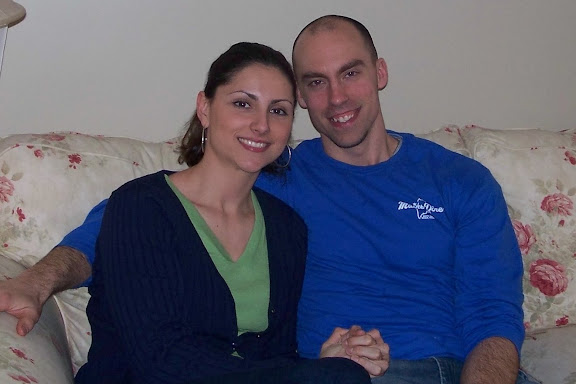

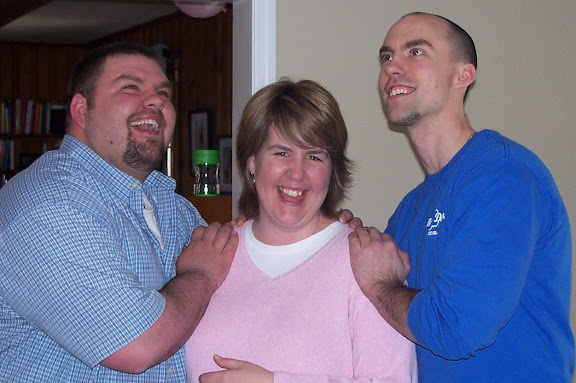
Katlyn met the family for the first time. She passed with flying colors.
My niece is obviously the most adorable little girl ever. She could totally beat your niece in a "Who is the most adorable niece ever?" contest. Admit it.
Saturday, March 24, 2007
Form Phobia

If there is ONE thing that will totally discredit a personal trainer in my eyes, it's LACK of reinforcing form. I don't care how long you have been training people, or how many letters you have next to your name; if you stand there and your client is performing a DB row or Romanian Deadlift with a rounded back, you just lost all credibility, and you enter "you suck" territory.
FYI: this picture is a perfect example of someone sucking.
Case in point, I was training at another facility the other day, and out of habit I observed the trainers there. I saw one of the "master" trainers having his client perform RDL's, and the guy looked like the hunchback of Notre Dame. Knee's shooting forward, no hip extension, and a completely rounded back. And the trainer just stood there watching, counting reps as if everything was perfectly fine. Matter of fact, the client finished his set, and the trainer said, "good...perfect."
Wow, if that was what he considered "perfect," I'd love to see what he considered "bad."
It's frustrating to be in a field where mediocrity is rampant. Worse yet, the consumer has NO clue. Part of me feels like a jerk that I tend to judge other trainers so often. I mean, I can deal with the fact that some trainers feel that giving someone a great workout is to put them on a machine circuit for 30 minutes and follow that with some BOSU ball crunches (although they should still be drop kicked for being so lame). But the other part of me feels like it's my obligation to call these trainers out. I mean, if I can have a 60 year old woman who has never lifted weights before in her life performing rack pulls with perfect form within 15 minutes, you should be able to have your 35 year old male who has been "training" for the past 5 years peform seated rows without looking like he's having a seizure.
Thursday, March 22, 2007
Proof That Quarter Squats Are for Wimps
There are a few things that I can count on happening each and every day, without fail:
1. I'm going to agree with everything that Colin Cowherd has to say on ESPN Radio: The Herd
2. People are going to annoy me on the subway.
3. I am going to see A LOT of atrocious squat form at the gym.
I see a lot of guys (and women) squat at the club where I work, and I will give credit where credit is due. The fact that these people are even in the squat rack is impressive. Nonetheless, I still find it sad that people fail to grasp the concept of full squats. Full squats = anterior surface of the thigh is BELOW the knee joint. People seem to STILL be under the assumption that squatting deep is bad for their knees. Worse yet, there are still many trainers out there who feel the same way. I am not going to go off on a rant about this too much, as I feel this topic would make a GREAT article. But I do want to share a study that I often use to showcase to people that squatting deep is in fact, NOT bad for your knees. Instead, squatting deep is good for the knees.
GJ Salem and CM Powers
Patellofemoral joint kinetics during squatting in collegiate women athletes.
Clin Biomech (Bristol, Avon), June 1, 2001; 16(5): 424-30.
OBJECTIVE: To characterize the biomechanics of the patellofemoral joint during squatting in collegiate women athletes. DESIGN: Repeated measures experimental design. BACKGROUND: Although squatting exercises are required components of most intercollegiate resistance-training programs and are commonly performed during rehabilitation, the effects of various squatting depths on patellofemoral joint stress have not been quantified. METHODS: Anthropometric data, three-dimensional knee kinematics, and ground reaction forces were used to calculate the knee extensor moment (inverse dynamics approach) in five intercollegiate female athletes during squatting exercise at three different depths (approximately 70 degrees, 90 degrees and 110 degrees of knee flexion). A biomechanical model of the patellofemoral joint was used to quantify the patellofemoral joint reaction force and patellofemoral joint stress during each trial. RESULTS: Peak knee extensor moment, patellofemoral joint reaction force and patellofemoral joint stress did not vary significantly between the three squatting trials. CONCLUSIONS: Squatting from 70 degrees to 110 degrees of knee flexion had little effect on patellofemoral joint kinetics. The relative constancy of the patellofemoral joint reaction force and joint stress appeared to be related to a consistent knee extensor moment produced across the three squatting depths. RELEVANCE: The results of this study do not support the premise that squatting to 110 degrees places greater stress on the patellofemoral joint than squatting to 70 degrees. These findings may have implications with respect to the safe design of athletic training regimens and rehabilitation programs.
1. I'm going to agree with everything that Colin Cowherd has to say on ESPN Radio: The Herd
2. People are going to annoy me on the subway.
3. I am going to see A LOT of atrocious squat form at the gym.
I see a lot of guys (and women) squat at the club where I work, and I will give credit where credit is due. The fact that these people are even in the squat rack is impressive. Nonetheless, I still find it sad that people fail to grasp the concept of full squats. Full squats = anterior surface of the thigh is BELOW the knee joint. People seem to STILL be under the assumption that squatting deep is bad for their knees. Worse yet, there are still many trainers out there who feel the same way. I am not going to go off on a rant about this too much, as I feel this topic would make a GREAT article. But I do want to share a study that I often use to showcase to people that squatting deep is in fact, NOT bad for your knees. Instead, squatting deep is good for the knees.
GJ Salem and CM Powers
Patellofemoral joint kinetics during squatting in collegiate women athletes.
Clin Biomech (Bristol, Avon), June 1, 2001; 16(5): 424-30.
OBJECTIVE: To characterize the biomechanics of the patellofemoral joint during squatting in collegiate women athletes. DESIGN: Repeated measures experimental design. BACKGROUND: Although squatting exercises are required components of most intercollegiate resistance-training programs and are commonly performed during rehabilitation, the effects of various squatting depths on patellofemoral joint stress have not been quantified. METHODS: Anthropometric data, three-dimensional knee kinematics, and ground reaction forces were used to calculate the knee extensor moment (inverse dynamics approach) in five intercollegiate female athletes during squatting exercise at three different depths (approximately 70 degrees, 90 degrees and 110 degrees of knee flexion). A biomechanical model of the patellofemoral joint was used to quantify the patellofemoral joint reaction force and patellofemoral joint stress during each trial. RESULTS: Peak knee extensor moment, patellofemoral joint reaction force and patellofemoral joint stress did not vary significantly between the three squatting trials. CONCLUSIONS: Squatting from 70 degrees to 110 degrees of knee flexion had little effect on patellofemoral joint kinetics. The relative constancy of the patellofemoral joint reaction force and joint stress appeared to be related to a consistent knee extensor moment produced across the three squatting depths. RELEVANCE: The results of this study do not support the premise that squatting to 110 degrees places greater stress on the patellofemoral joint than squatting to 70 degrees. These findings may have implications with respect to the safe design of athletic training regimens and rehabilitation programs.
Subscribe to:
Posts (Atom)